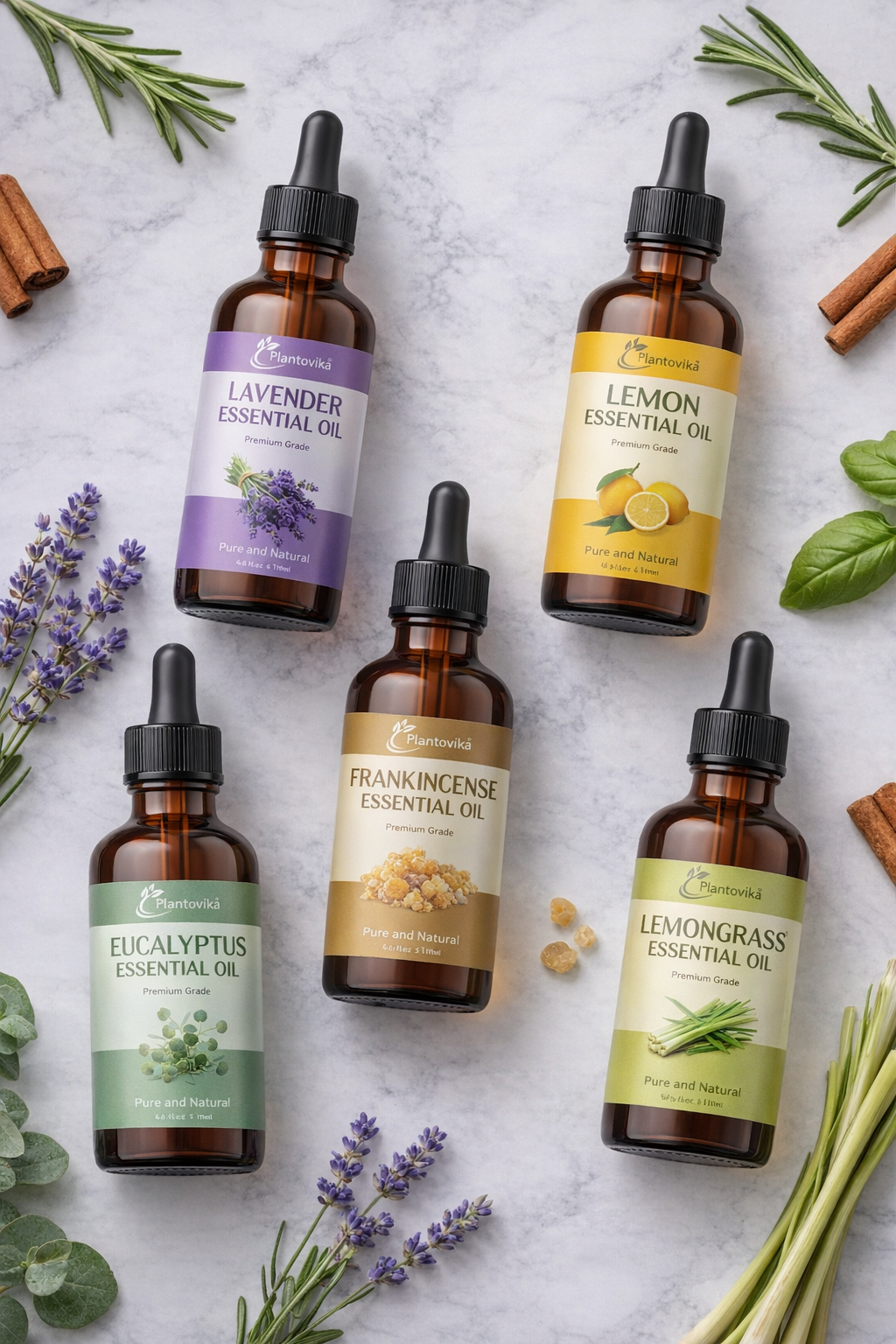
Essential oils are highly concentrated plant extracts that, when used correctly, can have a meaningful impact on scalp health and hair growth. Unlike carrier oils, essential oils are not applied directly — they must be diluted before use. But used properly, they are some of the most potent botanical tools available for hair care.
Essential Oils vs. Carrier Oils: The Key Difference
Essential oils are aromatic compounds extracted from plants through steam distillation or cold pressing. They are highly concentrated — a small amount contains the active plant compounds of a much larger quantity of raw botanical material.
Carrier oils (like jojoba, sunflower, or castor) are fatty oils derived from seeds and nuts. They are mild enough to apply directly to skin and hair, and they serve as the base for diluting essential oils.
The standard dilution for scalp application is 2–3% essential oil in carrier oil — roughly 12–18 drops of essential oil per 30ml (2 tablespoons) of carrier oil. Never apply undiluted essential oils to the scalp or skin.
The Best Essential Oils for Hair Growth
Rosemary — Best in a Ready-to-Use Hair Oil
Rosemary is the most studied botanical for hair growth. Its primary active compound, carnosic acid, has been shown to support nerve regeneration in the scalp and improve microcirculation to follicles. In clinical research, rosemary oil has shown comparable results to minoxidil for hair count improvement over a six-month period.
Unlike pure essential oils, Plantovika Rosemary Hair Oil is a ready-to-use hair oil — rosemary extract blended with jojoba, castor, argan, lavender, and peppermint oils. Apply directly to the scalp, no dilution required. Massage in and leave on for 30 minutes or overnight. Use 2–3 times per week.
Peppermint Essential Oil
Peppermint oil contains menthol, which creates the familiar cooling sensation on the skin. This effect is caused by vasodilation — the widening of blood vessels — which increases blood flow to the scalp. A 2014 study demonstrated significant hair growth promotion from peppermint oil in animal models, outperforming some control treatments.
How to use: Add 2–3 drops to one tablespoon of carrier oil. Massage into scalp. Limit to 2–3 times per week. The tingling sensation is normal; discontinue if irritation occurs.
Shop Peppermint Essential Oil →
Lavender Essential Oil
Lavender oil is well-regarded for its calming properties, but it also has documented effects on hair growth. A 2016 study found topical lavender oil application significantly increased the number of hair follicles and deepened follicle depth in subjects. Its antimicrobial properties also support a healthy scalp environment.
How to use: Add 4–5 drops to one tablespoon of carrier oil. Apply to scalp and hair. Can also be added to shampoo or conditioner. Safe for daily use when diluted.
Tea Tree Essential Oil
Tea tree oil is one of the most powerful natural antimicrobials available. Its primary value for hair growth comes from scalp purification — removing buildup, combating dandruff-causing fungi (Malassezia), and unclogging follicles that may be impeded by excess sebum or product residue. A clean, unblocked follicle is a functional follicle.
How to use: Add 2–3 drops to one tablespoon of carrier oil for scalp application, or add 5–10 drops to your shampoo. Avoid the eye area. Patch test before first use.
Eucalyptus Essential Oil
Eucalyptus oil has anti-inflammatory and antimicrobial properties that benefit the scalp. It helps reduce scalp inflammation, improve circulation, and create an environment where follicles can function optimally. It pairs particularly well with rosemary or peppermint in a scalp blend.
Shop Eucalyptus Essential Oil →
How to Build an Essential Oil Scalp Blend
Combining complementary essential oils can create a more comprehensive scalp treatment. Here is a simple, effective blend:
- 2 tablespoons jojoba or castor oil (carrier base)
- 3 drops peppermint essential oil (circulation)
- 3 drops lavender essential oil (follicle support, scent)
- 3 drops tea tree essential oil (scalp purification)
Mix in a small glass dropper bottle. Apply to scalp 2–3 times per week with a gentle massage. Store away from direct sunlight. Alternatively, Plantovika Rosemary Hair Oil is a pre-blended, ready-to-use formula that combines rosemary with peppermint, lavender, jojoba, castor, and argan oils — no mixing required.
Beyond Hair: Other Ways to Use Essential Oils
Essential oils are incredibly versatile. The same oils that support scalp health can be used across a wide range of DIY and wellness applications:
- Aromatherapy diffuser — Add 5–10 drops of lavender, eucalyptus, peppermint, or lemongrass to a diffuser to fill any room with natural fragrance and mood-supporting benefits. Lavender promotes relaxation; peppermint and eucalyptus energize and clear the mind.
- Spa and massage oil — Blend 5–6 drops of your chosen essential oil into one tablespoon of a carrier oil (like castor or jojoba) for a luxurious massage experience. Lavender and frankincense are ideal for calming treatments; peppermint and eucalyptus for invigorating ones.
- Soap making — Essential oils are a popular natural fragrance in cold-process and melt-and-pour soap recipes. Tea tree, lavender, peppermint, and lemon are among the most widely used for their scent and skin-friendly properties.
- DIY body scrubs and bath soaks — Add a few drops to a salt or sugar scrub base, or blend into a warm bath for a spa-style soak. Eucalyptus and peppermint create a refreshing experience; lavender and frankincense for a calming one.
- Room and linen spray — Combine 15–20 drops of essential oil with water and a small amount of witch hazel in a spray bottle for a natural room or pillow spray.
For a deeper look at DIY recipes and aromatherapy blends using essential oils, see our guide: Essential Oil DIY Recipes: Diffuser Blends, Massage Oils & More.
Safety Guidelines for Scalp Use
- Always dilute — undiluted essential oils can cause irritation, chemical burns, or sensitization
- Patch test first — apply diluted oil to inner arm and wait 24 hours before scalp use
- Avoid during pregnancy — consult a healthcare provider before using essential oils during pregnancy
- Keep away from eyes — rinse thoroughly with carrier oil (not water) if contact occurs
- Use pure oils — synthetic fragrance oils do not provide the same benefits and are more likely to cause irritation
Shop Plantovika's range of 100% pure essential oils: